- Comparitech Stack Report
- Posts
- Over 50 Charged in Major ATM Malware Ring
Over 50 Charged in Major ATM Malware Ring

Taylor Hawes
December 22, 2025
🔎 Cyber Watch 🔎
Over 50 Charged in Major ATM Malware Ringvely Exploited
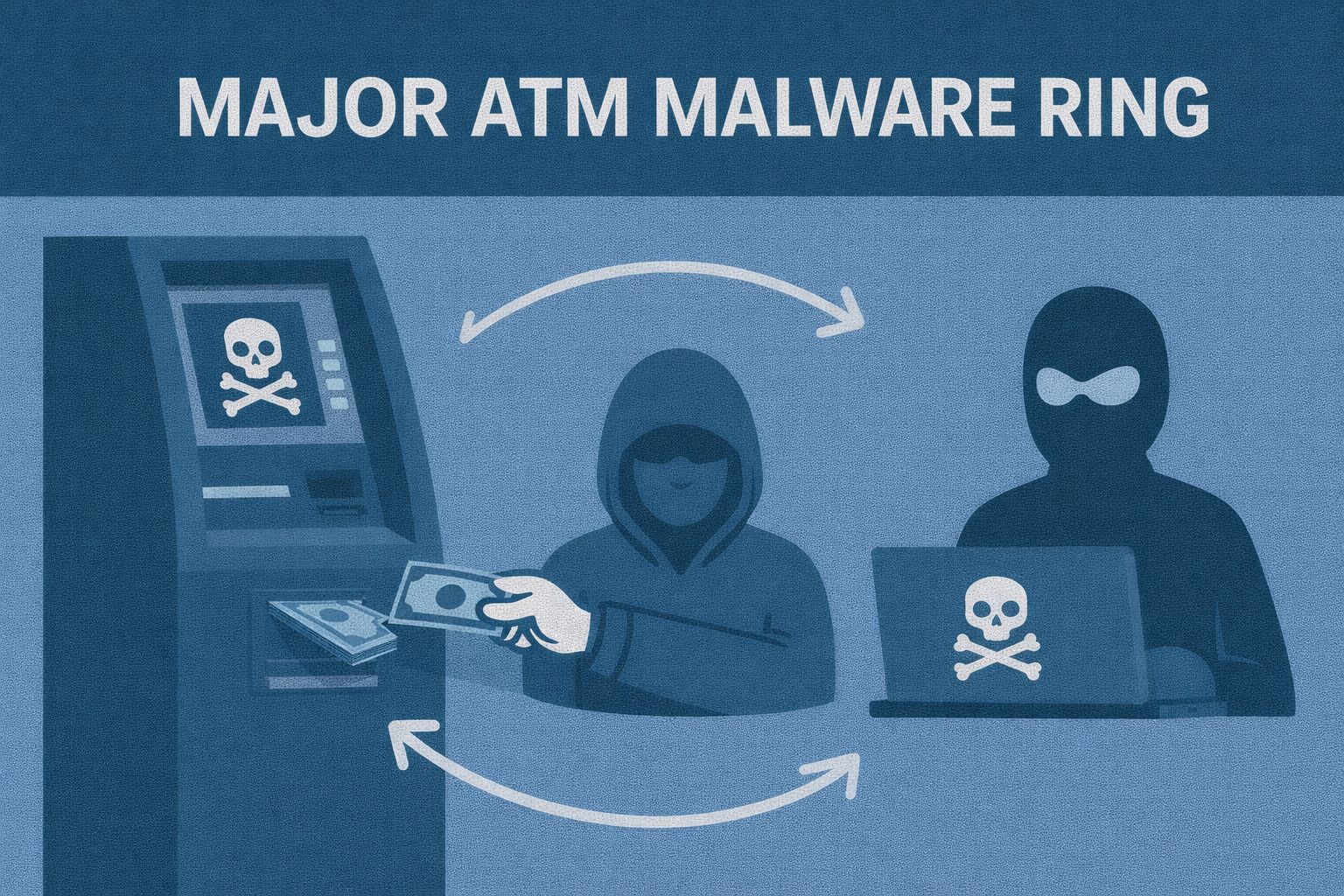
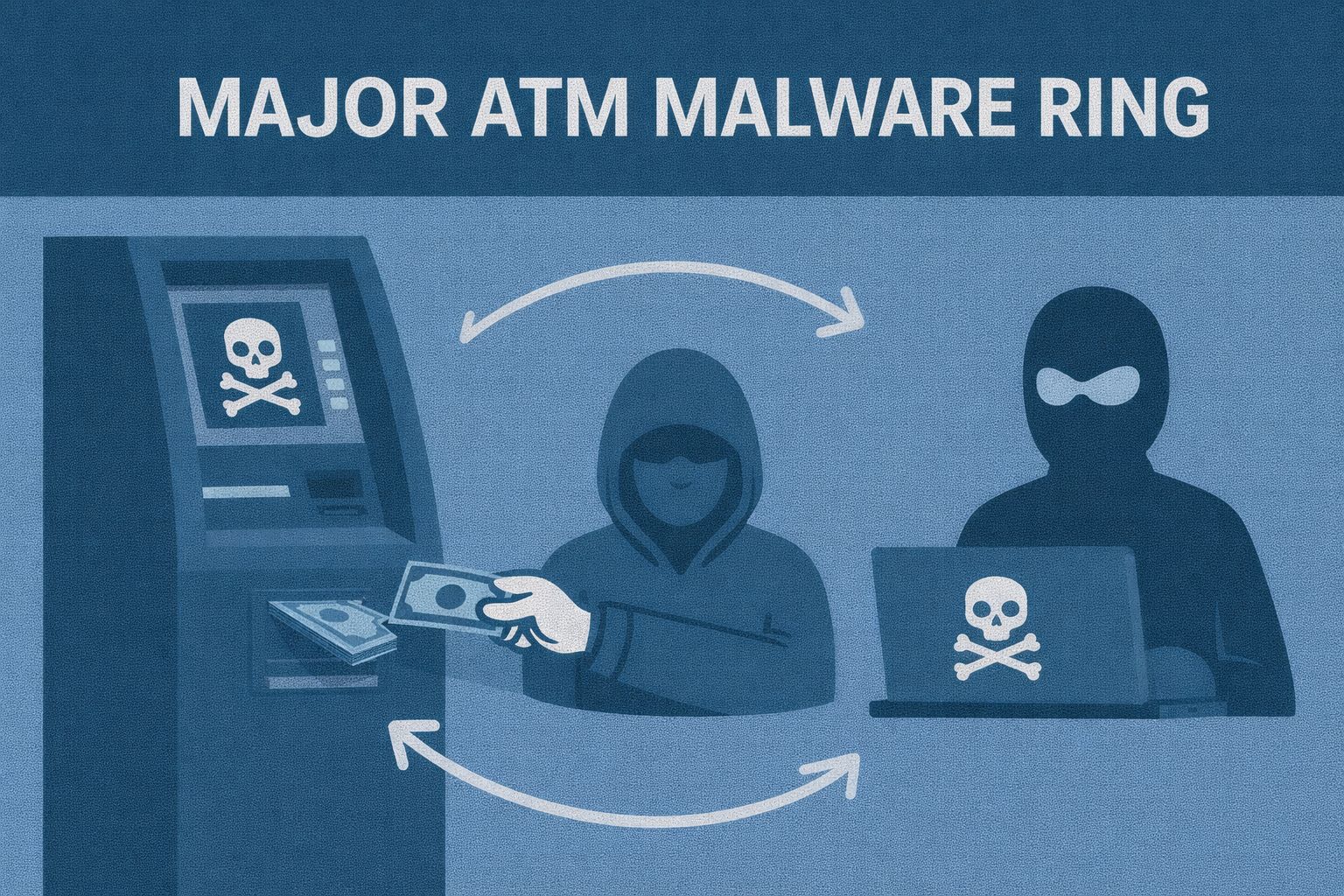
The U.S. Department of Justice has charged 54 individuals in a large ATM hacking operation. Federal prosecutors say this group used Ploutus malware to force automated teller machines to dispense cash unlawfully. Attackers reportedly gained physical access, installed the malware, and triggered unauthorized withdrawals. Many of the stolen funds are alleged to have been laundered to Venezuela to support a designated terrorist organization. Defendants face charges including bank fraud, computer damage, and material support to terrorism, with potential prison terms of decades to centuries.
Key takeaway
Physical access to ATMs remains a major risk when machines are not properly secured or monitored.
Malware such as Ploutus still works because many ATMs run outdated operating systems.
Cybercrime groups continue to mix cyber tactics with physical attacks to bypass controls.
Financial institutions face long-term risk when endpoint security and patching fall behind.
Law enforcement is now linking cybercrime cases more closely to money laundering and terrorism financing.
🎙️ Tech Briefing On‑Air 🎙️
Enterprise Use of AI Agents in GRC
In this podcast episode, host Joshua Nicholson speaks with Richa Kaul, CEO and Founder of Complyance. The discussion focuses on how agentic AI and automation are changing Governance, Risk, and Compliance in large organizations. Richa explains that spreadsheet-based GRC programs fail when scale increases. They rely on manual updates, delayed evidence, and point-in-time audits.
Takeaways: The episode explains a shift toward real-time risk monitoring, automated evidence collection, and always-on audit readiness. AI agents now help teams track controls, collect proof, and flag issues as they happen. This reduces manual work and gives leaders clearer risk visibility. Richa also covers privacy-first AI use, third-party risk, fast regulatory change, and the need for strong AI governance as enterprises move toward 2026.
🤝 Partner Intel 🤝
Decodo
Decodo (formerly Smartproxy) is a proxy service that provides residential, mobile, and datacenter IPs for tasks such as web scraping, market research, and brand security. The service offers a large IP pool and a suite of tools including the X Browser and proxy checker. Its Site Unblocker feature aims to bypass common anti-bot blocks. Users and expert reviews point to strong reliability and usability, though pricing can be complex for some plans. Decodo is suited for businesses needing flexible proxy solutions combined with data collection tools.
🤖 AI Runtime 🤖
Google Warns Slow Rules Might Reduce Competitiveness
Google executives have told U.S. lawmakers that slow-moving AI policy could weaken American innovation compared with other countries. They argue that carefully structured rules are preferable to overly cautious approaches that could delay deployment of useful AI tools. Google also notes that AI plays a role in cybersecurity defense, helping detect threats and respond to attacks more quickly. Although the executive focused on responsible use, the message suggests the U.S. must balance safety with momentum in AI development.
📊 By the Numbers 📊
24%
Non-CISO cyber spending is expected to grow at a 24 percent CAGR over the next three years, according to a McKinsey study.
🗳️ Your Monday Take 🗳️
Cast your vote on our weekly poll.
Which approach most improves cyber defence outcomes long term? |
📩 We’ll share the results in the Friday issue.
|
Until Friday’s edition - Let’s keep that zero-day count at zero!